
Exigent Defense Rico 309 Review
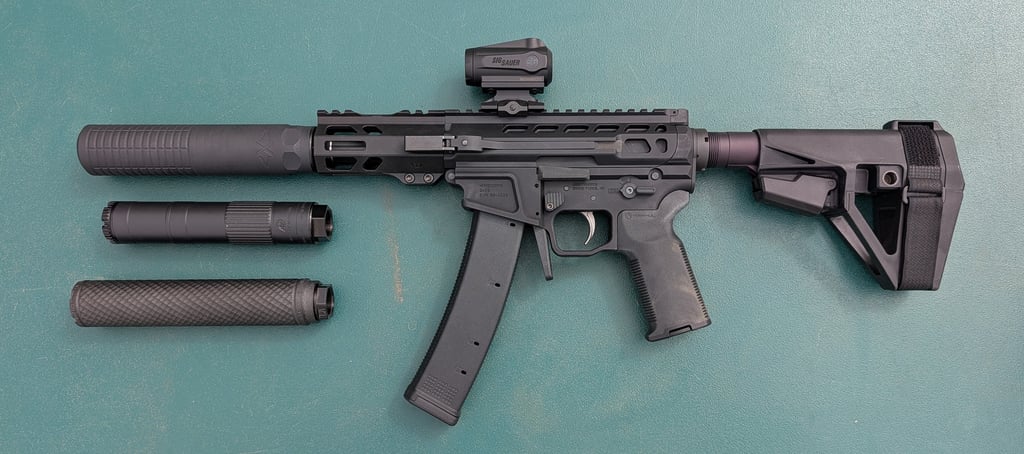
Exigent Rico 309 review and comparison to the Dead Air Mojave 9 and PTR Vent 2 on the Warscorp 9.
*Click to expand images
TL;DR:
The Rico 309 is a great combination of excellent sound performance and low backpressure.
Transparency note:
The Rico 309 was sent to us by Exigent at no cost. Otherwise we don’t have any business or financial relationship.
Test method:
We went out to the range and shot a bunch of rounds through the Rico 309, Mojave 9, and PTR Vent 2 back to back multiple times. We stood in the same spots and took notes after each one for gassiness and sound. Considering I don’t have Jay’s fancy sound metering equipment, I think this is a decent way to compare them.
All of this was done outdoors with a light breeze and away from reflecting surfaces. You may have different results in other environments.
Host:
The host is my Warscorp 9. The following parts have been changed out from the factory configuration:
4.5” Ballistic Advantage EPC barrel
Kynshot RB5000HP
2 spacer weights
Tubb flatwire spring
A5 length tube
We used AAC 147gr FMJ for all of our shooting. We also had 150gr Syntech, but it didn't cycle reliably.
Suppressors Overview:
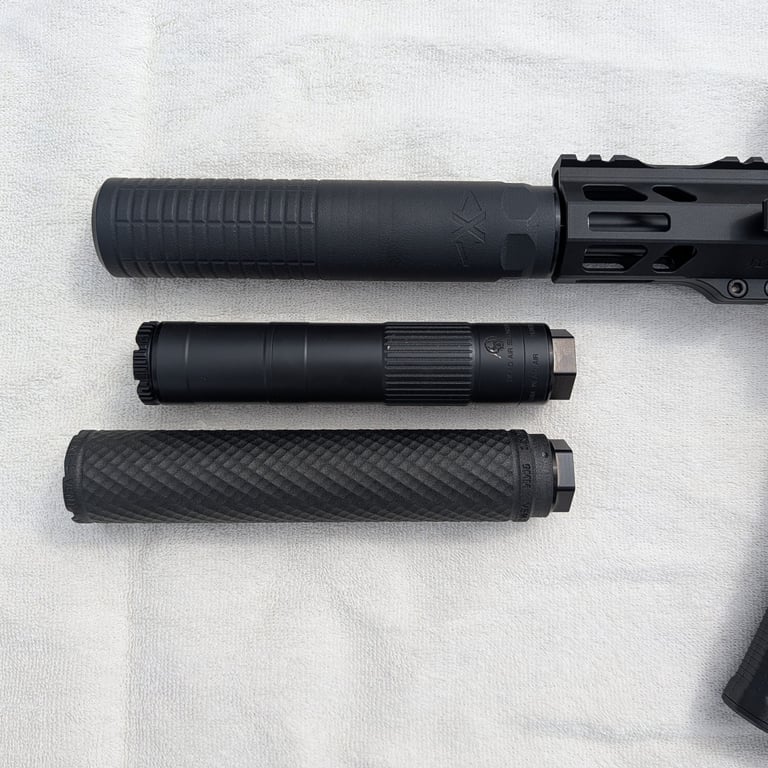
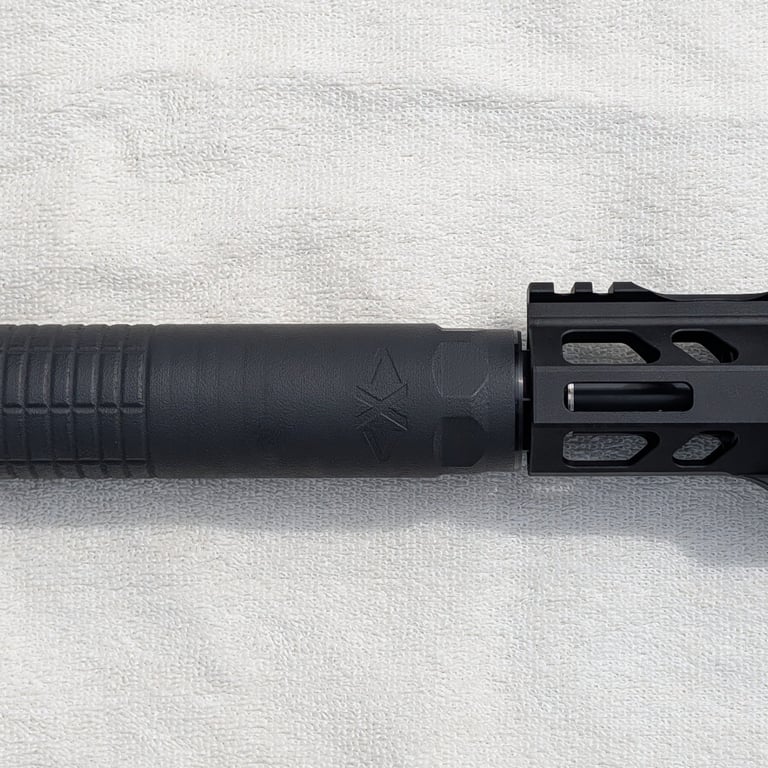
All weight and length values are given with no mount.


*Click to expand table
The Rico 309 was weighed before shooting. The Mojave 9 and Vent 2 have an unknown number of rounds through them and have never been cleaned.
*Note: Dead Air doesn't officially give the weight of the Mojave without any mounting parts, so this figure is the listed weight minus the piston assembly (4.1 oz).
All of the suppressors were run with their respective titanium Plan-B adapters: HUB, P-Series, and Alpha.
Weight, size, and general handling:
The Rico and Vent are very much full size suppressors, but due to the relatively light weight, are comfortable on the end of the gun and don’t significantly affect handling.
The Mojave was noticeably shorter and lighter than the Rico and Vent. It also has the ability to be run in short configuration which gets it down to 4.1 oz and 4.75” long.
Sound Performance:
The Rico 309 was the quietest of the three suppressors tested. It had minimal FRP and was impressively quiet overall. Much of the total noise came from the mechanical sound of the action. As a bystander, it was easy to make out the “thump” of the bullets hitting the dirt berm which is always fun.
We also put a few rounds of subsonic 300BLK through the Rico on my new Bear Creek bolt action upper. Same as with 9mm, it was very quiet and had minimal FRP. We didn’t shoot the other suppressors on this upper since it wasn’t running well.
All four of us there agreed that the Mojave was the loudest overall. Unlike the Rico, it had noticeable first round pop. However, this isn’t to say the Mojave is a “loud” suppressor as much as the other cans are just super quiet.
The Vent 2 was a little quieter than the Mojave 9, but not quite as good as the Rico. It also had low FRP.
Backpressure:
The Rico 309 had the lowest backpressure of the three suppressors tested today. Even though we could see gas coming out of the ejection port, it felt minimally gassy as the shooter. Blowback actions are inherently somewhat gassy, so I consider this to be a great result.
In long configuration, the Mojave has what I would describe as “low to medium” backpressure. It’s not zero, and during longer strings of fire you can definitely feel it a bit. It’s still low enough I think most people won’t be bothered. It has less backpressure in short configuration, but we didn’t run it like that for this test.
Backpressure for the Vent 2 was a little higher than the Rico, but lower than the Mojave. When it was newer it felt like it was sandblasting me with little bits of titanium, but this has mostly subsided.
Overall Opinion and Suggested Use Cases:
We were all very impressed by the Rico 309. It checks all of the main boxes of being reasonably lightweight, low backpressure, and sounding great. I also really appreciate that it has full size wrench flats which makes it very easy to install mounting parts. With an MSRP of $875, I think this is an excellent value for a full size PCC/subgun suppressor. The only case I wouldn’t recommend this is if you specifically wanted something very compact.
The blast baffle of the Rico measured about 1.7” deep which is pretty generous for a 9mm suppressor. It’s been added to our fitment tool.
As much as I love the Mojave 9, I have to say it’s generally outclassed by the Rico for PCC use. However, it makes a lot of sense for handguns (the platform it’s intended for), and situations where you’re ok trading some sound performance for reduced length and weight. In some ways it can be thought of as a flexible halfway point between the Shiv (tiny, low sound suppression) and the Rico 309 (long, very high sound suppression).
The Vent 2 isn’t a bad suppressor, but in my opinion it’s overpriced for what it is. It’s a ~$460 premium over the Rico 309 without offering better performance or additional features. I was also disappointed to find that their “PIP” tech is only actually used in the endcap and not the inside of the suppressor.
I’m not entirely sure why, but I still have issues with little flakes of what I think is titanium coming out of the can. This gets into the threads of the adapter and muzzle device and has to be cleaned out regularly which is pretty inconvenient. It’s been shot and flushed out with water several times, so this might be a permanent thing.
Even ignoring PTR’s patent trolling and lawsuits, I just don’t see much of a reason to get the Vent.
Future Testing and Reviews:
Recently we did a bunch of flash testing of 11 rifle suppressors. That’ll get posted at some point here. We’re also getting an Infinity 762 and 556k to review.
Have a great weekend!
- Nathan Comstock


Privacy Policy
© 2026 Comstock, Inc. All rights reserved. Comstock Armory is a registered trade name of Comstock, Inc.
Follow us!